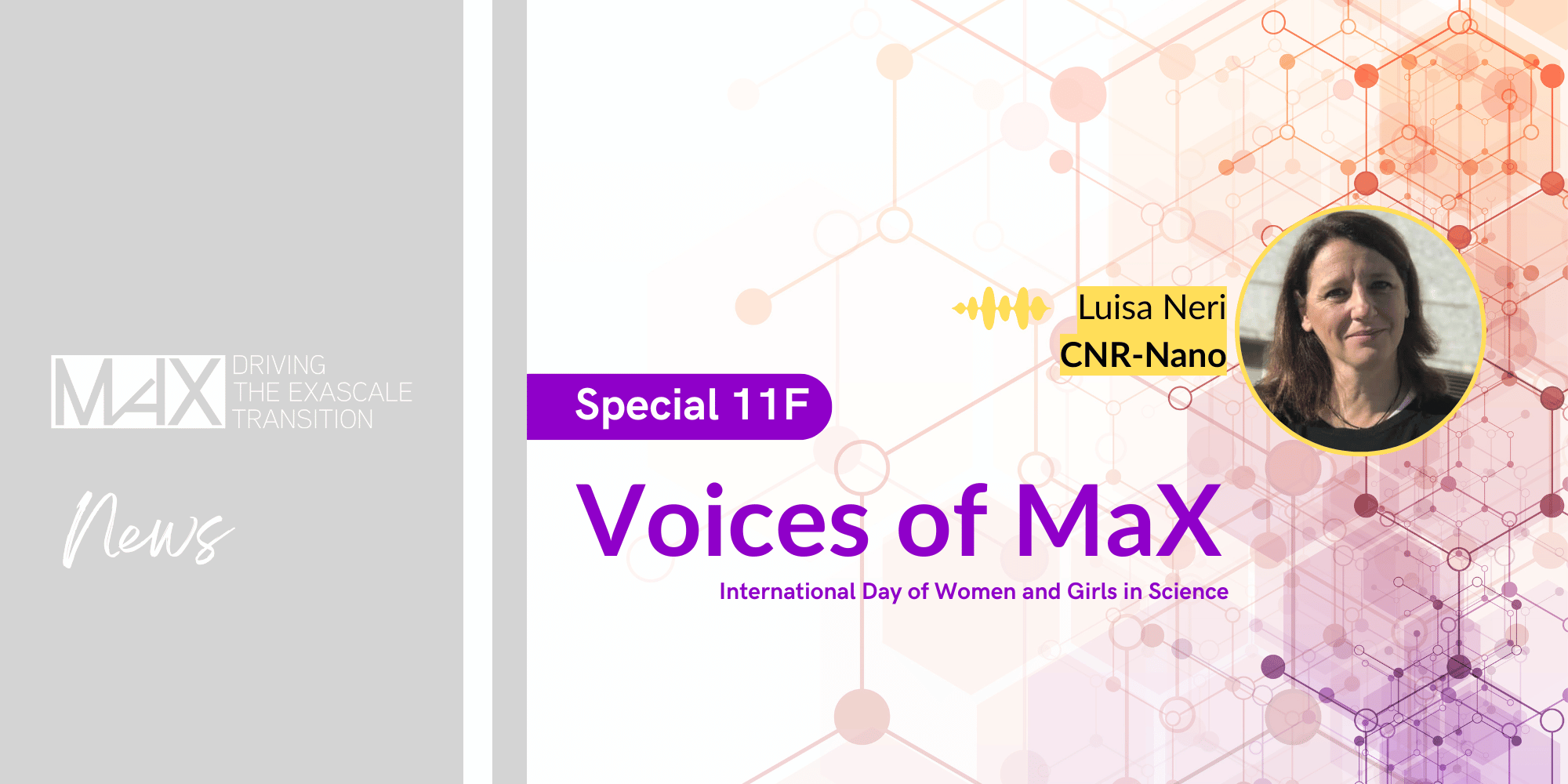
On the International Day of Women and Girls in Science, Voices of MaX returns with a special episode dedicated to gender equality in European research. In conversation with Luisa Neri (CNR-Nano, MaX Management), we explore how gender equality is shaping EU-funded projects today, from leadership and management to everyday research practice. A reflection on policies, real experiences, and why inclusion is essential for better science.
Gender equality is a key priority in EU-funded research, as it shapes both policy frameworks and project implementation. On the occasion of the International Day of Women and Girls in Science (11 February), “Voices of MaX” podcast presents a special episode that examines how gender-related requirements are integrated into research projects, their influence on management and governance, and the role of inclusive practices in promoting research excellence and sustainability.
A conversation from inside EU-funded research
In this episode, we are joined by Luisa Neri, technologist at CNR-Nano and Work Package Leader of MaX Management. Luisa works closely with European research consortia and brings a perspective that connects policy frameworks with practical experience.
Rather than treating gender equality as a formal requirement, the conversation explores how it has gradually become part of the way research projects are conceived and run, from proposal writing to decision-making, leadership roles, and dissemination activities. Luisa reflects on how European initiatives, such as Horizon Europe and Gender Equality Plans, have pushed research communities to look beyond participation numbers and to consider gender as a dimension of science itself.
« I hope in ten years we will not need to explain why we deserve a place in research anymore as it would be natural to give us room ». Luisa Neri (CNR-Nano)
Small actions, lasting effects
Throughout the discussion, attention is given to concrete practices that can make a difference. Sometimes these are visible actions: promoting women scientists through communication campaigns, widening the pool of speakers at training events, or ensuring balanced representation in boards and committees. Other times, the impact comes from simply keeping the conversation alive: sharing data, questioning habits, and challenging the idea that the current landscape is inevitable.
The episode also touches on persistent challenges, particularly the difficulty of combining research careers with family responsibilities and the slow progression of women into senior roles, especially in fields such as high-performance computing. These issues remind us that progress exists, but it is uneven and often fragile.
Listen to the episode
We invite you to listen to the episode, reflect on the discussion, and join us in continuing the conversation — on 11 February and well beyond: Special Edition | 11F – International Day of Women and Girls in Science.