
A novel machine learning approach reduces DFT computation time while accurately predicting electron densities for molecular and periodic systems.
Applications: Materials discovery, Computational chemistry, Energy storage & batteries.
Keywords: Electron density, Density matrix, SE(3) equivariant neural networks, Graph neural networks, ML-accelerated DFT.
Density functional theory (DFT) is central in computational chemistry and materials science, as it predicts molecular and material properties from first principles. Electron density determines all ground-state properties, including energies, forces, and multipole moments. DFT is computationally intensive, particularly for large systems or high-throughput studies, limiting its use. Machine learning (ML) can accelerate DFT by predicting properties directly, but conventional models often require extensive data and generalize poorly.
Predicting electron densities is challenging. Grid-based representations are data-intensive and inefficient for large molecules. Density fitting approximations reduce cost but compromise exactness. Additionally, the self-consistent field (SCF) procedure relies on an initial density guess; poor guesses result in increased iterations and computational cost. A solution must accurately and efficiently predict densities, respect physical symmetries, and provide improved initial guesses to accelerate SCF convergence.
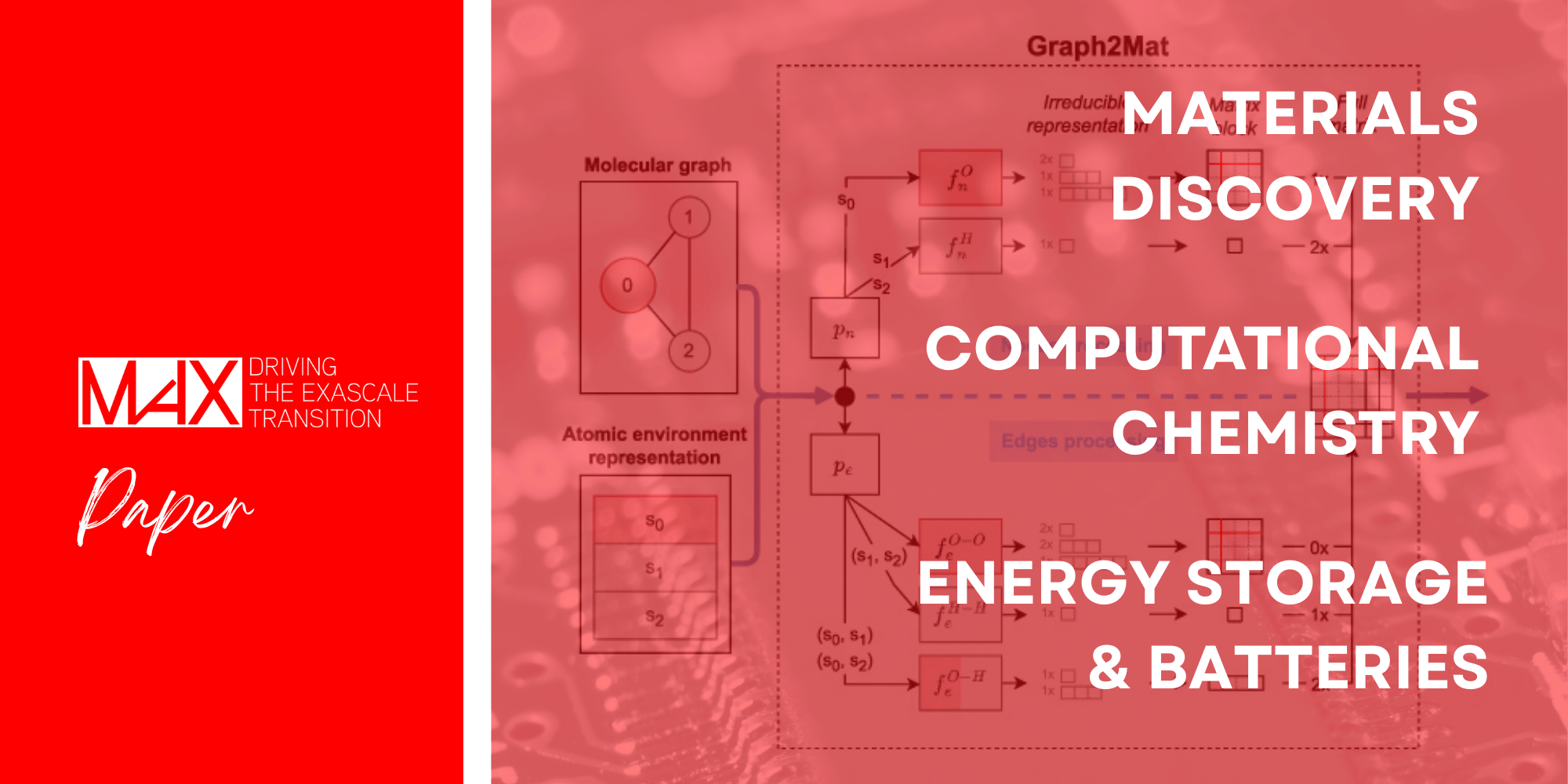
Graph2Mat is a universal, SE(3) equivariant function converting atom-centered graphs into sparse, symmetry-aware density matrix (DM) blocks. By targeting the DM rather than grids, it captures exact electron densities efficiently. Coupled with MACE, a state-of-the-art graph neural network, it predicts node and edge DM blocks while maintaining physical equivariances.
Key results:
- Accurate DM prediction with less training data than grid-based methods.
- ~40% reduction in SCF iterations for QM9 molecules in SIESTA simulations.
- Novel uncertainty measures (total charge and self-consistency errors) enable active learning.
- Generalizable to other matrices (Hamiltonian, Overlap, EDM) and periodic systems.
Graph2Mat’s direct DM prediction ensures physical consistency and transferability in molecules, liquids, solids, and interfaces. The function provides a general, symmetry-aware machine learning framework that predicts density matrices for both molecular and periodic systems. By focusing on the density matrix rather than grid-based electron densities, it achieves high accuracy with significantly less training data. Integrating these predictions with DFT codes accelerates the self-consistent field (SCF) convergence and enables reliable calculation of properties such as total energies, dipoles, and atomic charges.
This approach supports high-throughput screening, large-scale simulations, and uncertainty-aware workflows. Its generality allows extension to other electronic structure matrices and any 3D graph-based equivariant data, making it broadly applicable across materials science, computational chemistry, and energy research.
Explore Graph2Mat:
Accelerate DFT workflows using the open-source code at GitHub: BIG-MAP/graph2mat.
Reference paper:
Graph2Mat: universal graph to matrix conversion for electron density prediction.