
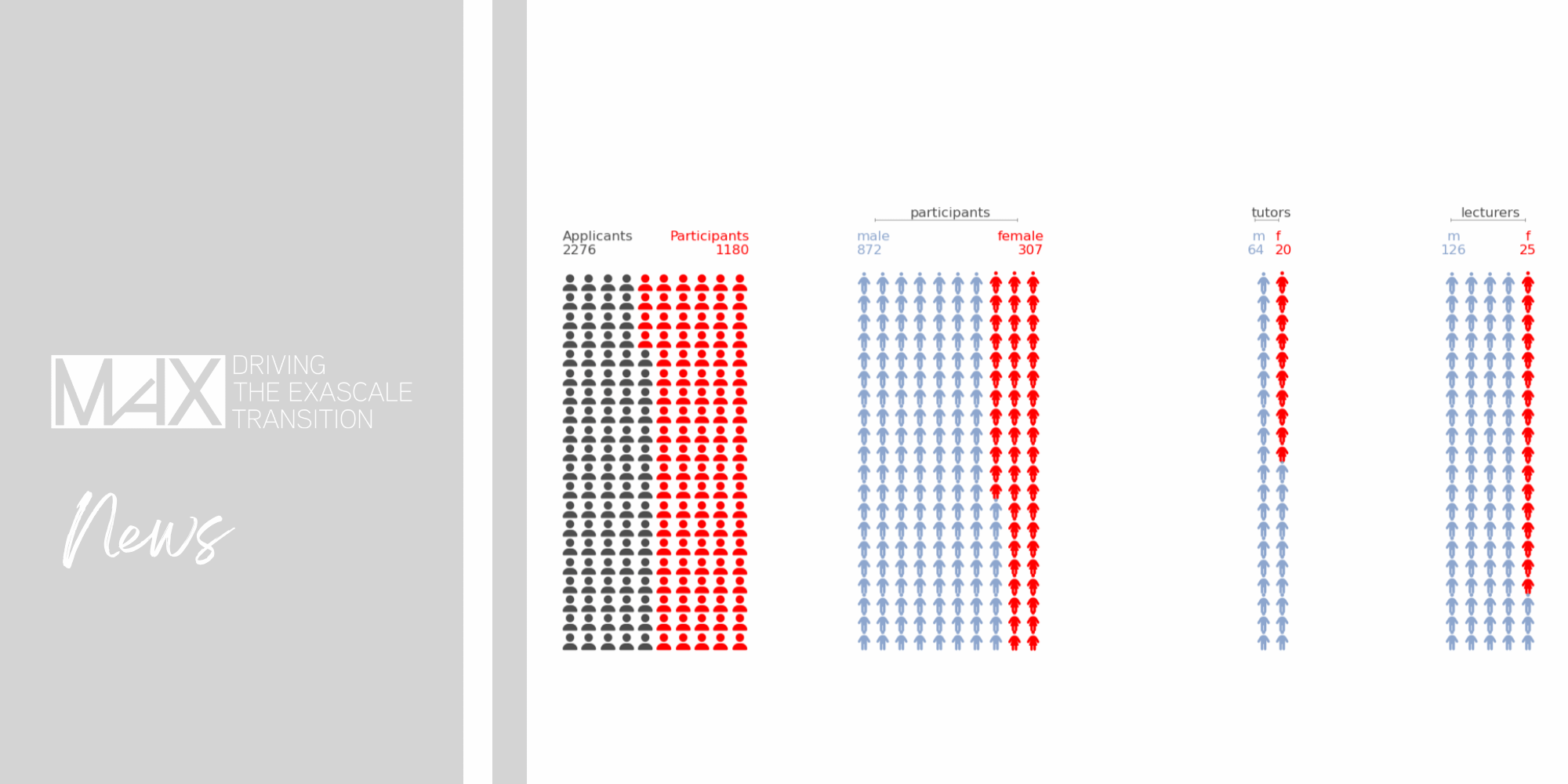
Between 2023 and 2026, MaX training activities reached more than 1,100 researchers worldwide, combining in-person courses, online sessions and hackathons to foster expertise in advanced computational methods while promoting inclusive participation and high-quality learning experiences across the community.
Between 2023 and 2026, MaX organised 22 training events aimed at strengthening the expertise of academic and industrial researchers in the use of MaX software solutions and advanced computational methods. These activities combined different formats to address the needs of a diverse community, including 13 in-person courses, 9 online sessions and 4 hands-on hackathons:

The blended training approach proved highly effective in combining accessibility with in-depth interaction. While online events enabled wider participation, particularly for introductory topics, in-person courses provided a valuable environment for direct exchange with MaX developers, HPC experts and researchers. Hackathons further expanded this collaborative model by offering participants the opportunity to work directly on practical challenges, develop their skills and engage with experts in a problem-solving environment.
The demand for MaX training activities has been particularly strong. More than 2,200 researchers applied to participate, although logistical limitations meant that 1,180 attendees could ultimately be accommodated. Participants represented a highly international community: 75% came from European countries, while the remaining 25% joined from regions including India, the United States, China and Brazil. Within Europe, the participation of researchers from Eastern European countries represented 19% of the European audience, reflecting the impact of targeted training initiatives in these regions.
MaX is also committed to promoting diversity within computational science and HPC communities. Women represented 26% of all participants, while female tutors and lecturers accounted for 19% of the teaching team. These figures highlight both the progress achieved and the importance of continuing to encourage broader representation among participants, organisers and invited experts:

The quality and impact of the training programme are reflected in the feedback collected through anonymous evaluations. Across the different activities, participants consistently rated their experience between “Very Good” and “Excellent”, recognising the relevance of the content, the expertise of the instructors and the value of the collaborative learning environment.
Further information about MaX training activities, outcomes and future directions can be found in the MaX Training booklet, which provides a collection of the programme and its contribution to the computational research community.